By Sean Kurtz, Founder — Michigan Rose Construction | LARA Licensed Residential Builder #262300264
“Will my paver patio still look good in ten years?” It’s the question almost every homeowner asks after writing a check for a new patio, and it’s a fair one. Pavers are a serious investment, and nobody wants to watch that investment sink, shift, or stain within a few seasons.
The good news: a properly installed paver patio can easily outlast the deck next to it, often by decades. The catch is that “properly installed” and “properly maintained” both matter, especially in Michigan, where freeze-thaw cycles put more stress on hardscaping than almost anywhere else in the country. Here’s what actually affects how long your patio lasts, what routine maintenance looks like, and how to tell a cosmetic issue from a real problem.
Key Takeaways
- A properly installed paver patio lasts 25 to 30+ years in Michigan, but freeze-thaw cycles can cause shifting or sinking without regular maintenance
- Re-sanding joints every 2 to 3 years and resealing every 3 to 5 years prevents most common paver problems
- Sunken or heaving pavers are almost always a base issue, not a paver issue, and can usually be repaired without full replacement
- Efflorescence (white staining) is cosmetic and normal in year one, not a sign of failure
- DIY re-leveling works for small areas, but base repair and drainage issues need a professional
How Long Do Paver Patios Actually Last in Michigan?
With proper installation and a well-compacted base, a paver patio in Michigan typically lasts 25 to 30 years or more, and individual pavers themselves can last even longer since they’re solid concrete or natural stone. What actually limits lifespan isn’t the pavers, it’s the base underneath them.
Michigan’s freeze-thaw cycles push and pull at soil and base material all winter long, and a base that wasn’t compacted correctly or doesn’t have proper drainage will move over time no matter how good the pavers on top are. That’s why a properly installed paver patio, one with a compacted gravel base, correct slope for drainage, and edge restraints to keep everything locked in place, holds up so much better than one that was rushed. If your patio was installed correctly to begin with, the maintenance below is what keeps it looking that way for decades instead of years.
Planning a New Paver Patio This Fall?
Whether you're envisioning a cozy backyard retreat, a spacious entertainment area, or a custom outdoor living space, Michigan Rose Construction designs and installs beautiful, long-lasting paver patios that are built to handle Michigan's changing seasons. Let our team help you create the perfect patio before winter arrives.
The Maintenance Schedule That Actually Prevents Problems
Paver patios don’t need much upkeep, but the little bit they do need makes a real difference in Michigan’s climate. Sweep the patio regularly to keep debris out of the joints, and pull weeds as soon as you see them so roots don’t work their way under the pavers.
Every 2 to 3 years, top off the joint sand between pavers. Polymeric sand is worth the extra cost here specifically because of our climate: it hardens in place and resists washing out during Michigan’s heavy spring rains, which keeps water from getting underneath the pavers and freezing.
Every 3 to 5 years, reseal the surface. Sealing does two things: it protects the pavers from staining and it helps lock the joint sand in place through freeze-thaw cycles, which is the single biggest factor in how long a Michigan patio holds its shape. Skipping resealing doesn’t ruin a patio overnight, but it’s the maintenance step most homeowners skip, and it’s usually the reason a patio that should have lasted 25 years starts showing problems at year ten instead.
Common Paver Problems and What's Actually Causing Them
Sinking or settling is the most common complaint, and it’s almost always a base issue rather than a paver issue. Water pools in one low spot, erodes the base material underneath over repeated freeze-thaw cycles, and the pavers above it settle into the gap.
Heaving, where pavers push upward instead of down, is the opposite problem: water gets trapped in the base, freezes, expands, and lifts the pavers with it, a process called frost jacking that’s common in areas without proper drainage.
Weeds growing between joints usually mean the joint sand has washed out or was never compacted properly to begin with, leaving gaps for seeds to take root. Efflorescence, the white, chalky staining that sometimes appears on new pavers, alarms a lot of homeowners, but it’s completely normal. It’s mineral deposits rising to the surface as the concrete cures, and it typically fades within the first year with regular rain and light cleaning.
Moss and algae show up in shaded, damp areas of the patio, usually where drainage is slow to dry the surface, and while they’re mostly cosmetic, a slick mossy patio can also become a slip hazard. Knowing which of these is a real structural problem and which is just normal weathering saves a lot of homeowners from either panicking over something cosmetic or ignoring something that actually needs attention.
DIY Fixes vs. When to Call a Professional
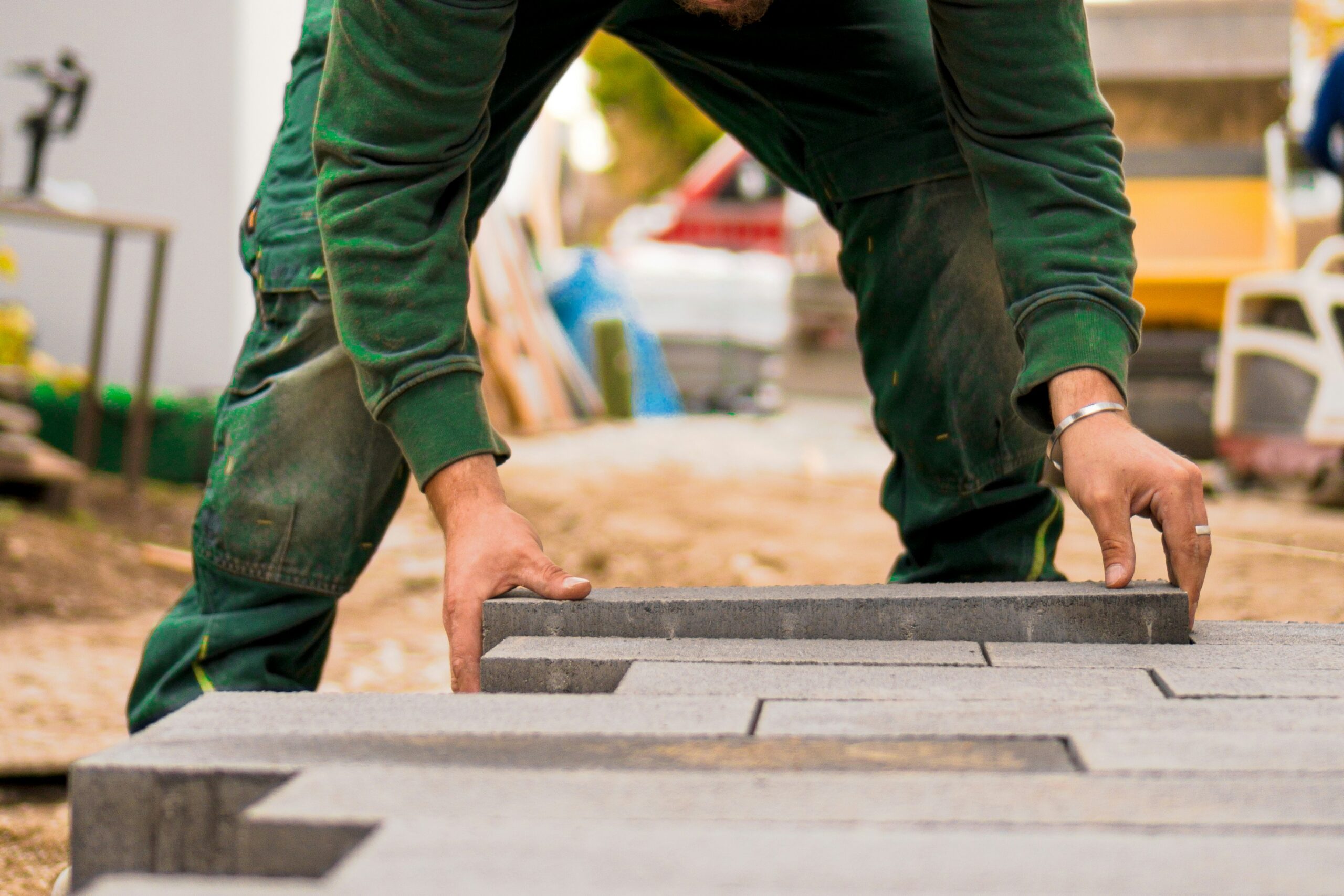
Some paver issues are genuinely DIY-friendly. Re-sanding joints, pulling weeds, cleaning off moss or efflorescence, and even lifting and resetting a handful of individual pavers in a small sunken area are all reasonable weekend projects for a homeowner comfortable with basic outdoor work.
Where it gets more complicated is anything involving the base underneath the pavers. If a section keeps sinking after you’ve releveled it, or if the problem covers more than a few square feet, that’s a sign the base material itself has eroded or was never compacted correctly, and topping it off won’t fix it long term.
Drainage issues, standing water on or near the patio, and widespread heaving are also base-level problems that need to be excavated and rebuilt properly rather than patched. This is where professional paver repair earns its cost: fixing the underlying base once, correctly, instead of relaying the same section every couple of years.
Signs Your Patio Needs More Than a Repair
Occasionally a patio has moved beyond what spot repairs can fix. Sinking or heaving across most of the patio, rather than in one isolated area, points to a base or drainage problem throughout the entire installation, not a localized issue.
Pavers that are cracking, rather than simply settling, usually means the base underneath has failed structurally in that section. And if you’ve already repaired an area once or twice and the same problem keeps coming back, that’s the clearest sign the base needs to be rebuilt rather than patched again.
In these cases, a full reinstallation of the affected section, sometimes the whole patio, is more cost-effective long term than repeated repairs that don’t address the actual cause. If you’re not sure which category your patio falls into, a quick on-site assessment is the fastest way to find out.
Maintenance is cheap insurance against an expensive full reinstallation. A few hours every couple of years keeps a paver patio looking and performing the way it did on day one, well past the 25-year mark. Not sure whether your patio needs a repair or a refresh? Get a free on-site assessment from Michigan Rose Construction, and we’ll tell you honestly what it needs.
Planning A New Paver Patio This Fall?
Michigan Rose Construction designs and installs beautiful, durable paver patios built to withstand Michigan's changing seasons. Contact our team today to schedule your free consultation and create the perfect outdoor living space before winter arrives.
Ready to Transform Your Outdoor Space with a Beautiful Paver Patio?
Whether you’re dreaming of a cozy backyard retreat, an elegant entertainment area, or a durable outdoor living space, Michigan Rose Construction designs and installs custom paver patios built to complement your home and withstand Michigan’s changing seasons. We proudly serve homeowners throughout Ann Arbor, Saline, Ypsilanti, and Washtenaw County.
Contact us today to schedule your free consultation and discover how a professionally installed paver patio can enhance your home’s beauty, functionality, and value for years to come.
Don't Wait Until Freezing Temperatures Make Patio Installation More Challenging
Fall is one of the best times to install a custom paver patio before Michigan's winter weather arrives. Contact Michigan Rose Construction today to request your free estimate and let our experienced team create a beautiful, durable outdoor living space you'll enjoy for years to come.
Why Homeowners Choose Michigan Rose Construction
Choosing the right contractor is just as important as choosing the right season for your project.
Michigan Rose Construction provides professional concrete driveway installation for homeowners throughout Ann Arbor, Saline, Ypsilanti, and surrounding communities. As a licensed and insured contractor, the team understands how Michigan’s climate affects outdoor construction and follows proven installation practices designed for long-term performance.
From the initial consultation through the final walkthrough, Michigan Rose Construction focuses on quality workmanship, clear communication, and dependable service that homeowners can trust.
Conclusion
A custom paver patio is one of the best investments you can make to enhance your outdoor living space while increasing your home’s curb appeal and functionality. Fall provides ideal conditions for installation, allowing the pavers to be properly set before Michigan’s freezing temperatures and winter weather arrive. Starting your project now means you’ll be ready to enjoy your new patio as soon as spring returns.
Whether you’re creating a relaxing backyard retreat, an outdoor dining area, or an entertainment space for family and friends, working with an experienced contractor ensures your patio is built to last. Professionally installed paver patios offer exceptional durability, easy maintenance, and timeless beauty that complements any home.
Michigan Rose Construction has spent 15+ years helping homeowners throughout Ann Arbor, Saline, Ypsilanti, and Washtenaw County transform their outdoor spaces with expertly crafted hardscapes. As a fully licensed (License #2601230264), bonded, and insured residential builder, we deliver high-quality paver patio installations designed to withstand Michigan’s changing seasons and provide years of enjoyment.
Ready to create your dream outdoor living space? Contact Michigan Rose Construction today for a free consultation and let our team bring your vision to life.
Michigan Rose Construction has spent 15+ years helping homeowners throughout Washtenaw County, Ann Arbor, Saline, and Ypsilanti transform their backyards into beautiful, functional outdoor living spaces. As a fully licensed (License #2601230264), bonded, and insured residential builder, we deliver custom paver patio installations designed to enhance your home’s beauty, value, and long-term durability.
Contact us today:
License #: 26230264
Issued by: LARA
License Type: Residential Builder Co. – Fully licensed, bonded, and insured
Proudly serving Ann Arbor, Michigan, and surrounding communities with premium basement remodeling services since 2010. Our service area includes all of Friendly Neighborhoods in Michigan state.
Note: All cost ranges are estimates and may vary based on specific project requirements, location, and market conditions. Contact MichRose Construction for a detailed quote for your specific needs.
Michigan Rose Construction serves homeowners across Metro Detroit, Ann Arbor, Grand Rapids, Traverse City, and throughout Michigan with expert deck construction and maintenance services tailored to our unique climate challenges.
We do not share any client data with third parties. Your personal information is kept confidential and is not disclosed to any outside organizations, except as required by law or with your explicit consent.
Frequently Asked Questions
Every 3 to 5 years in Michigan, depending on sun exposure and traffic. Sealing protects against freeze-thaw damage and keeps joint sand locked in place.
Almost always a base compaction issue, not a problem with the pavers themselves. Water pooling in that area over time erodes the base material underneath, and it needs to be excavated and re-compacted, not just topped off.
Yes. That’s efflorescence, a natural mineral deposit that appears in the first year and typically fades with normal weathering and rain. It’s cosmetic, not structural.
Small, isolated areas can often be fixed by lifting the pavers, adding and compacting base material, and resetting them. Widespread sinking or repeat problems in the same spot usually point to a drainage issue that needs professional diagnosis.