Why Your Outdoor Lighting Needs Summer Protection?
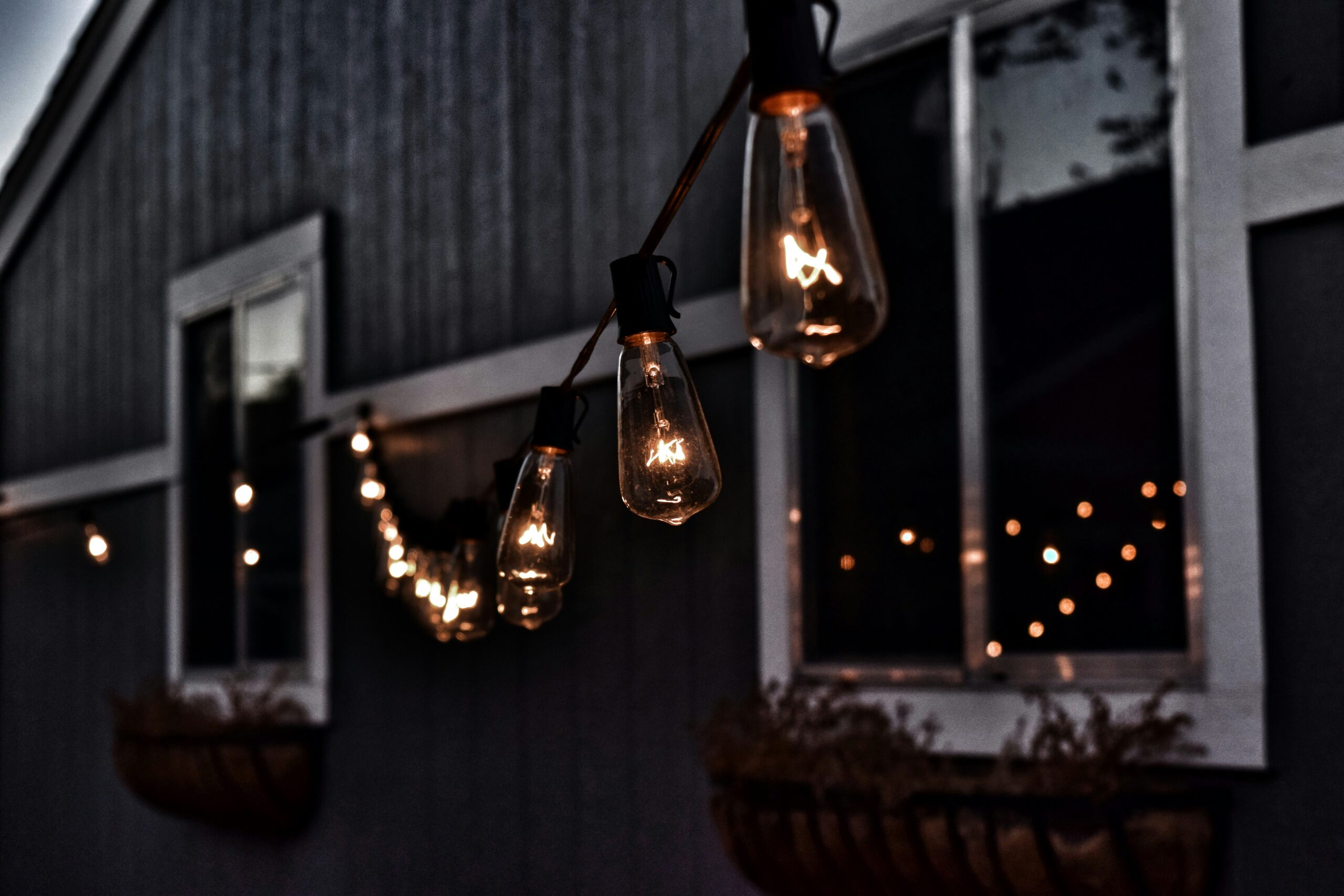
Your outdoor lighting creates the first impression before guests even reach your front door. But flickering bulbs and corroded fixtures signal neglect and in Michigan’s summers, the problem runs deeper than aesthetics.
Summer brings unique challenges for homeowners maintaining outdoor electrical systems. Heat, sudden thunderstorms, and humidity cycles create the perfect conditions for electrical failure often without visible warning signs until complete failure occurs.
According to the National Fire Protection Association (NFPA), residential electrical fires account for an average of 33,470 incidents each year. Proper outdoor lighting maintenance significantly reduces your home’s contribution to that number.
Key Takeaways: Summer Outdoor Lighting Maintenance
- Prevention saves money: Regular maintenance costs far less than replacing damaged fixtures
- Heat and moisture are enemies: Summer’s combination creates unique risks for outdoor lighting
- Quality matters: Invest in properly-rated fixtures — brass, copper, or high-grade aluminum
- Installation technique is critical: Proper mounting height, drip loops, and irrigation separation prevent most failures
- Regular cleaning preserves performance: Remove pollen, spider webs, and debris that trap heat and moisture
- LED technology reduces risk: Lower operating temperatures and voltage improve safety
- Post-storm inspection is essential: Check for water infiltration and connection issues after heavy rain
- Know when to call professionals: Circuit additions, intermittent failures, and design work require licensed expertise
Why Maintenance Matters?
- Cracked wiring and water damage create fire risks and shock hazards
- Small issues compound into expensive repairs
- Faulty lighting disrupts summer gatherings and outdoor entertaining
- Unprotected fixtures become insect habitats that block light and corrode components from within
Good maintenance isn’t about perfection. It’s about catching problems before they ruin your summer nights or put your family at risk.
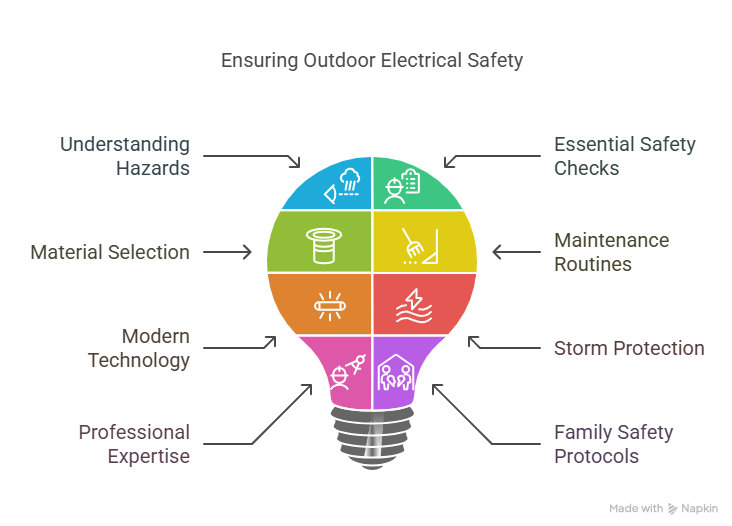
8 Outdoor Lighting Maintenance Tips to Keep Your Fixtures Safe This Summer
1. Understand Summer's Hidden Electrical Hazards
Most homeowners don’t realize how gradually summer weather undermines electrical safety. Days of intense sun bake outdoor lighting fixtures to temperatures exceeding 140°F, followed by rapid nighttime cooling that creates metal fatigue in connections.
Add sudden thunderstorms that soak everything, followed by humidity that never lets components dry completely. The result is a cycle of stress that accelerates component deterioration invisibly.
Unlike indoor electrical issues that announce themselves with flickering or buzzing, outdoor lighting problems frequently go unnoticed until complete failure sometimes with dangerous consequences for Michigan homeowners.
2. Perform These Essential Safety Checks
A few hours of preventive outdoor fixture maintenance dramatically reduces these risks. Here’s where to start:
Walk your property during daylight and inspect every inch of visible wiring. Look for cracked insulation, corroded connections, or fixtures pulling away from mounting surfaces. Pay close attention to junction points where wiring enters fixtures — these fail first.
Press gently on wire connections. They should feel firmly seated, not loose. Examine wire nuts and connectors for signs of overheating (brown discoloration) or water infiltration (white mineral deposits).
Test every GFCI outlet serving outdoor circuits. These devices can deteriorate without showing external damage. The test/reset process takes seconds but could prevent a fatal shock outdoor GFCIs that look perfectly functional often fail when properly tested.
Verify fixture ratings. Wet-rated outdoor fixtures survive direct rain exposure. Damp-rated fixtures handle humidity without direct water contact. Installing the wrong type virtually guarantees premature failure and potential safety hazards.

3. Choose Materials and Installation Methods That Last
Material selection fundamentally impacts safety and longevity. For Michigan’s variable climate hot summers, heavy rains, and freeze-thaw cycles budget outdoor lighting fixtures corrode within months, creating hazards as internal components deteriorate.
Select quality materials for long-term performance:
- Solid brass
- Copper
- High-grade aluminum
These materials withstand environmental stress far better than cheaper alternatives.
Sealed designs dramatically outperform open fixtures by preventing water and insect infiltration. Implement these installation techniques to prevent common failures:
- Mount fixtures at least 12 inches above grade to prevent submersion during heavy downpours
- Use architectural features like eaves for natural weather shielding
- Create proper drip loops ensuring connecting wires hang below fixtures before rising to connections so water drips off rather than tracking into electrical components
- Keep irrigation spray patterns away from lighting fixtures repeated soaking and mineral deposits from fertilizer-enriched water accelerate internal corrosion
For decorative pathways and accent applications, modern solar alternatives have improved significantly and eliminate ground-level moisture vulnerability entirely.
4. Establish Regular Maintenance Routines
Regular cleaning prevents performance-robbing buildup most homeowners overlook:
- Pollen accumulation blocks ventilation, causing operating temperatures to exceed design specifications
- Spider webs trap moisture against metal surfaces, accelerating corrosion
- Leaves and organic debris create fire hazards when pressed against hot components
Conduct a visual inspection after every major storm. Water pooling inside fixture lenses signals failed seals requiring immediate attention standing water eventually reaches electrical components, creating shock hazards and accelerating failure.
Tighten all connections mid-season. Connections that are snug in spring often loosen by mid-summer as materials repeatedly expand and contract through Michigan’s heat cycles. Loose connections generate heat that deteriorates surrounding components.
Replace bulbs proactively at roughly 80% of rated life to eliminate erratic current draw that stresses fixture components and causes inconvenient outages during gatherings.
5. Upgrade to Safer Modern Technology
LED technology fundamentally changes the safety equation for outdoor lighting:
- Dramatically lower operating temperatures reduce fire risk
- Many landscape LED systems operate below 30 volts, eliminating lethal shock potential
- Minimal current draw reduces load on outdoor circuits that may already operate near capacity during summer months
Automated controls add safety beyond convenience. Motion activation eliminates human error lights operate only when needed. Timer functions prevent accidental extended operation that increases failure probability through cumulative heat exposure.
Zoned lighting systems allow selective operation rather than all-or-nothing approaches. Operating decorative and security lighting independently prevents unnecessary wear and directly extends component life.
6. Implement Comprehensive Storm Protection
Lightning protection requires thinking beyond basic surge suppressors. While service panel suppressors provide essential protection, supplemental point-of-use devices at outdoor circuits add valuable redundancy protecting expensive landscape lighting controllers from indirect strikes.
Dedicated outdoor lighting circuits allow selective disconnection during threatening conditions without affecting essential services. This practical approach makes weather precautions manageable rather than requiring whole-house disconnection.
7. Know When to Call Professionals
Some outdoor lighting tasks require a licensed contractor. Amateur circuit additions frequently overlook critical safety elements:
- Proper conduit selection and routing
- Code-required burial depth
- GFCI protection at all outdoor circuits
Intermittent problems lights that work sometimes but not others quickly exceed typical homeowner diagnostic capability. Professional temperature scanning can identify overheating connections not detectable by visual inspection alone.
Landscape lighting design also requires technical knowledge beyond aesthetics. Proper voltage drop calculations prevent underperforming fixtures and overheated wires. Correct transformer sizing prevents fire hazards during peak demand periods.
8. Create Family Safety Protocols
Beyond technical maintenance, household safety planning is equally important:
- Ensure all family members know circuit breaker locations and how to operate them
- Create clearly labeled disconnection points for outdoor systems
- Keep a Class C fire extinguisher (rated for electrical fires) accessible near outdoor entertainment areas
Establish weather monitoring practices to anticipate conditions requiring precautionary measures. Define specific trigger points for system disconnection during approaching storms. Automated weather alerts provide timely notification when conditions warrant action.
Need Expert Help With Your Outdoor Lighting in Michigan?
Michigan Rose Construction specializes in outdoor lighting and fixtures with materials that balance both function and style for Michigan's variable climate.
Our Michigan-Focused Expertise
- 15+ years of specialized experience with Michigan homes and Businesses.
- Deep understanding of local building codes and climate requirements
- Award-winning design-build services
- Comprehensive project management
- Transparent pricing and detailed quotes
- Industry-leading warranty coverage
Transform Your Outdoor Lighting Experience
Outdoor lighting shouldn’t be a seasonal headache—it should enhance your summer evenings. With proper maintenance, your fixtures can shine brighter, last longer, and keep your home safe without constant repairs.
No more guessing, no more flickering frustrations, just reliable, stunning illumination that makes every evening special.
Contact us today:
License #: 26230264
Issued by: LARA
License Type: Residential Builder Co. – Fully licensed, bonded, and insured
Proudly serving Ann Arbor, Michigan, and surrounding communities with premium basement remodeling services since 2010. Our service area includes all of Friendly Neighborhoods in Michigan state.
Note: All cost ranges are estimates and may vary based on specific project requirements, location, and market conditions. Contact MichRose Construction for a detailed quote for your specific needs.
Michigan Rose Construction serves homeowners across Metro Detroit, Ann Arbor, Grand Rapids, Traverse City, and throughout Michigan with expert deck construction and maintenance services tailored to our unique climate challenges.
We do not share any client data with third parties. Your personal information is kept confidential and is not disclosed to any outside organizations, except as required by law or with your explicit consent.
Frequently Asked Questions: Outdoor Lighting Maintenance
Outdoor lighting systems should be thoroughly inspected at least twice yearly — once in spring before heavy use and again in fall before winter weather. Conduct additional visual inspections after severe storms or extreme weather events.
No. Pressure washers force water into seals and electrical connections. Clean fixtures with a soft cloth dampened with mild soap and water, with power off before cleaning.
Water infiltration combined with heat stress causes most summer outdoor lighting failures. As fixtures heat during the day and cool at night, they breathe — potentially drawing moisture inside. Quality fixtures with proper seals and correct installation technique prevent this.
Signs your outdoor electrical system needs professional attention include: fixtures over 10 years old, visible corrosion, frequent bulb replacement, tripping circuit breakers, flickering lights, or visible wiring insulation damage.
Smart outdoor lighting systems offer remote control, automated scheduling, energy efficiency monitoring, and home security integration. The initial cost is higher, but reduced energy consumption, extended bulb life, and enhanced security typically deliver a positive return on investment.
Line voltage systems operate at 120 volts and require professional installation with conduit and junction boxes. Low voltage systems operate at 12-24 volts, pose lower shock risk, use smaller wiring, and are easier to modify. For most residential applications, low voltage systems provide the best balance of safety, flexibility, and performance.